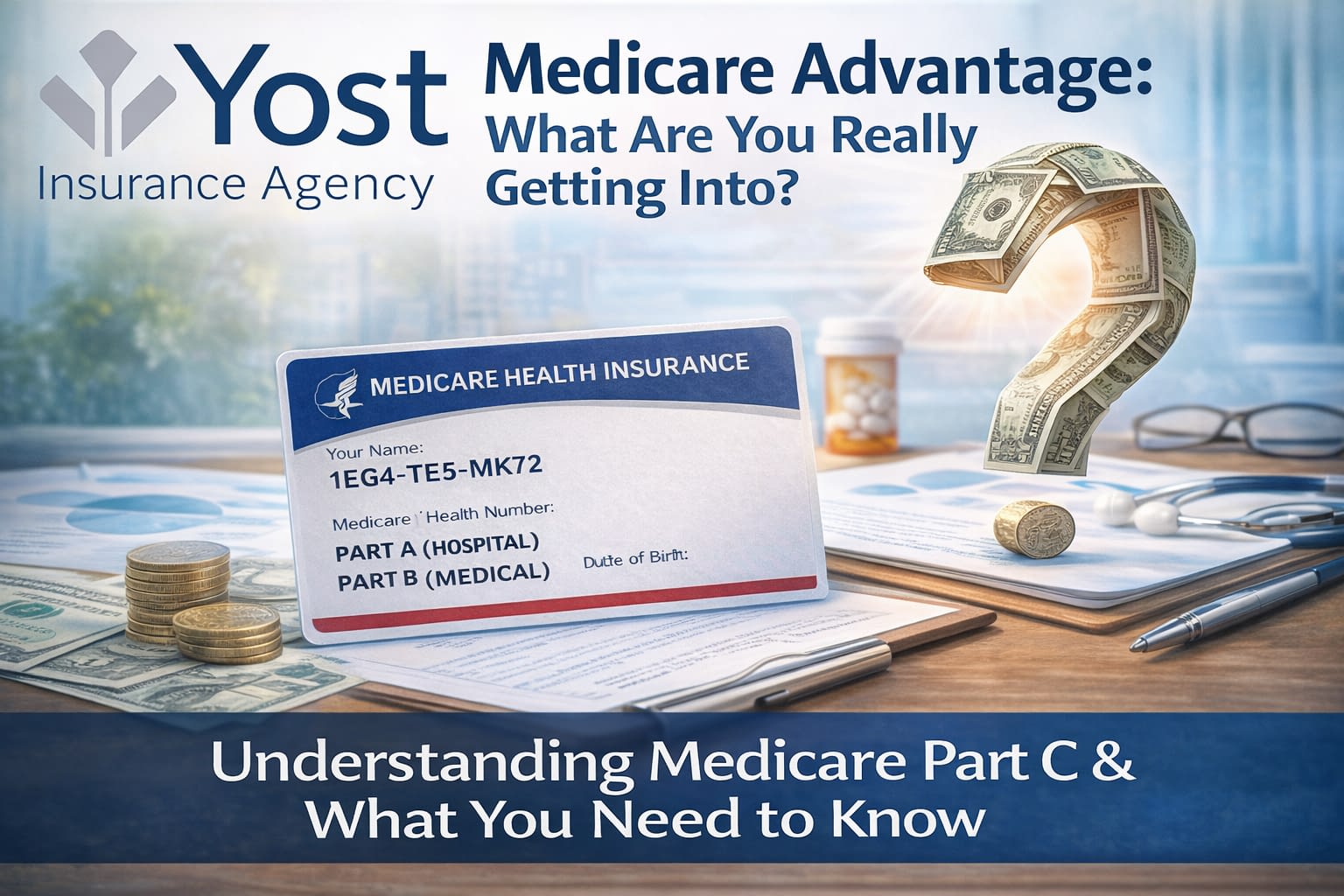
Medicare Advantage seems to be the talk of the town in this current market. Also referred to as Part C or Medicare +, these plans seem to offer the world for little or no cost. But how could that be. What’s really going on behind the scenes? To understand Medicare Advantage, we need to first look at Original Medicare.
Under Original Medicare, it’s the government who offers Medicare Part A and Part B. Your Part A hospital deductible ($1,734 per admittance) and Part B medical coinsurance (20% of medical costs) is set by the government each calendar year. Now all you have to do is pay your Part B premium and you’re in! You can go to any doctor who takes Medicare and have any procedure done that Medicare approves with very little if any prior authorization at all. But… you are subject to the high out of pocket costs associated with Original Medicare. In fact, Original Medicare doesn’t even have an out-of-pocket maximum, therefore there is no end to the amount of medical costs you may be responsible for each year.
Some say, “I’ll just buy a Medicare Supplement Plan to help pay what Original Medicare doesn’t.” That’s all well and good, but not everyone wants to pay an additional $125 to $200+ per month on top of their Part B premium to feel adequately covered. So, what other options are out there? Enter, the Medicare Advantage Program!
Under the Medicare Advantage Program, it’s not the government who provides Medicare it’s the insurance company. Now to be eligible for this program, you must be entitled to Medicare A and enrolled in Medicare Part B and continue paying your Part B premium. The government in turn, subsidizes the insurance company to provide Medicare in its place. Yes, the government pays the insurance company a significant amount of money each year a member renews their Medicare Advantage plan.
Now, because it’s the insurance company who is providing Medicare in this case, you play by their rules, not the government’s. Under Medicare Advantage, you can see any doctor who is in the insurance plans network, and have any procedure done that the insurance company approves. This is like your traditional group healthcare HMO and PPO plans. These plans involve networks, copays, prior authorization, and all carry a maximum out-of-pocket to protect you from high medical costs during the year. Many also include Part D drug coverage and extras like dental, vision, and hearing.
Essentially, the insurance company is managing your care, and not the federal government. Is this a good thing? It can be! The insurance company is in it to make a profit. So, they have a vested interest in seeing that your healthcare plan runs efficiently, cutting down on waste and abuse when possible. They also want to avoid major claims, so they encourage members to seek preventive care and offer programs that encourage a healthy lifestyle. But at the end of the day, each client of ours is an individual with their own specific set of wants and needs. This is why as agents; we always provide the full scope of education to make sure you have the information necessary to choose a plan that meets your needs!
